





Read Full Transcript
The Dirt, with me, Mike Howell, an eKonomics podKast where I present the down-and-dirty agronomic science to help grow crops and bottom lines. Inspired by eKonomics.com, farming’s go-to informational resource, I’m here to break down the latest crop nutrition research, news, and issues helping farmers make better business decisions through actionable insights. Let’s dig in.
(00:39)
Well, hello, again, everyone. Welcome back to The Dirt. I am really excited about this episode. Not really going to be talking about agronomy again today, but something really exciting is going on here. Nutrien is celebrating 65 years of mining potash in Saskatchewan. To help me talk a little bit about this historic event and what’s going on there, today, I have Trevor Berg with me. Trevor, welcome to The Dirt.
Trevor Berg (01:02):
Great. Yeah, thank you for having me, Mike. Pleasure to be here.
Mike Howell (01:04):
Trevor, before we dig in and start talking about the 65 years of mining potash, if you would introduce yourself to our listeners and let them know what you do.
Trevor Berg (01:12):
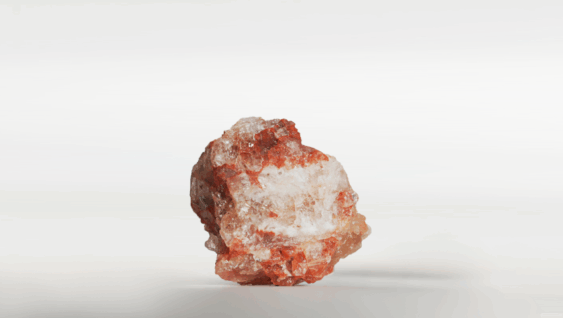
Sure. I’d be happy to. I lead our potash group for Nutrien and we produce potash which is the K as part of the nutrients of the NPK. So mine and produce potash ship to our customers and eventually to the farmers. The nutrients help support that plant growth and ultimately help produce more food for the world. Specifically for potash, we have our six mines right here in Saskatchewan and then we also have our technical and land and resource group here in Saskatoon. So roughly about 3,400 people producing almost 14 million tons of potash to help support the farmers, and the food that the world needs.
Mike Howell (01:45):
Trevor, let’s talk a little bit more about the six mines that you mentioned. Tell us a little bit about how the mines got started, a little bit of the history. While we started producing potash, I know there had to be some challenges getting these things up and running. Give us a little bit of the historical perspective on these mines.
Trevor Berg (02:01):
I’ll maybe go back a long ways in time to help understand why we’re mining potash here in Saskatchewan as well. And part of that is over 400 million years ago there was an inland sea across this part of the world and that was eventually cut off and through evaporation, it was left. And the nutrients and minerals were left including the layers of potash that we have were left behind. And now we find that 400 or some, uh, million years later to be about 1 kilometer underground here in Saskatchewan.
(02:28)
We have our six mines, five of them are conventional. One is a solution line. But for our conventional lines, we are down about a kilometer or 3,300 feet. They’re two-thirds of a mile down underground mining that potash. We think about the 65 years ago that you had mentioned, that was really when the first thousand tons of potash came out of one of our mines here at Patience Lake and that was, as you mentioned, it’s not without trials and tribulations for people to get there. It actually started with some finds that were in the 1940s and then into the 1950s when they started to try and to sink the first shaft.
(02:59)
And that it was really one of the biggest challenges that needed to be overcome was thinking a shaft here as you can imagine going down almost two-thirds of a mile into the ground. There’s some water formations that people needed to learn about and get through so the first few shafts that were attempted here in the province weren’t successful but eventually Patience Lake was one of the places where the shaft was sunken and finished in about 1955 and that was done through really freezing that layer and putting in, what we call that layer is a Blairmore area where there’s a water bearing formation so that is sealed off and the constructions done by freezing that ground and then eventually putting in the Blairmore rings that we call them today, which is really the tubbing to help us get through that areas.
(03:38)
Now, we have the six mines and after that forest area, 1959 was the first production and after the next couple of decades really is when our next five mines came online during that time.
Mike Howell (03:48):
Trevor, if you would walk us through the production process what happens when we mine potash out of the ground, we just can’t take it straight to the field? What has to happen.
Trevor Berg (03:56):
So as I mentioned before, we have our mines and the ore is over 3,000 feet of underground. We actually have a few hundred miles of roadways we’d call them or drifts and belting with continuous mining machines out at the ends of those and so across our six mines if we were just to take one mine we have, we’ll call it on average about a dozen mining machines in different areas of the mine which is roughly the footprint of the city the size of Saskatoon which is about 300,000 people.
(04:24)
It’s a very big footprint (laughs) and many things that are going on underground. So with those many miles of beltings and the continuous mining machines at the end of those belts and people, we safely work on getting that product back to the shaft. When it gets back to the shaft, we hoist it and we hoisted roughly about 40 to 50 tons at a time in our skips which are really the core part of our operation getting that ore from underground to surface. And then we move it into our mills on surface and through various processes of flotation and separation we concentrate that ore and end up with our centrifuge dry and then eventually compacting and screening that product to get it to the warehouse.
(05:04)
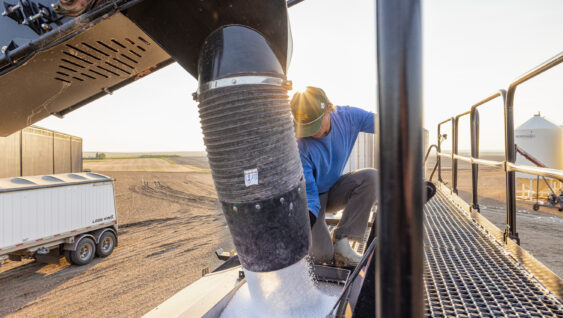
And after the warehouse, of course, there’s another long road. We’re in the, the center of Canada here where we’re producing and we have thousands of miles to get to whether we’re getting to the North America market or we’re getting to international markets. We need to move that via rail and some local customers via truck as well. So we’re moving about 14 million tons or almost 14 million tons of product this year out to our customers both North America and 40 countries around the world.
Mike Howell (05:30):
Trevor, I had the opportunity to visit one of these mines several years ago and I understood kind of what I was getting into before I got there, but when I actually got on the elevator and went down the shaft, I could not believe the size of some of the machines that you mentioned that are a mile underground. How in the world do you get these big mining machines down there. I mean, I’m thinking something the size of big excavators that people are familiar with.
Trevor Berg (05:52):
Yes, it’s a good question as you can imagine you’ve seen the size of the shafts that we have and the hoist that you went down on things cannot fit underground in one piece so they’re actually shipped to us in parts and then they’re assembled. And it takes a few months to assemble these machines even for the new ones. We have welds that are many inches to a foot thick that have to be done in some of the cases when we’re removing machines or putting them back into service so they definitely have to be hoisted down in parts and then assembled underground.
Mike Howell (06:22):
Well, Trevor, we mentioned that we’ve been mining potash for over 65 years now. And I know a lot of things have changed we’ve had a lot of improvements made. Can you talk a little bit about some of the innovation and some of the learnings that we’ve made in the potash mining and while we’re so successful there in Saskatchewan.
Trevor Berg (06:37):
Quickly just mention again some of the, uh, shaft-syncing learnings that happened in the late ’40s and ’50s really was the core to get us down to the orebody. And after that mining really, with continuous mining, mining methods changed a little bit just to make it safer continuously learning and making it safer over the years. But maybe I’ll point to what we’ve been working on as of late and that’s really our automation program underground. So we have continuous mining machines. It’s highly efficient.
(07:03)
But one of the things that we wanted to do was to remove people from the active working face and keep them away as far as possible to reduce that risk potential to our employees. So we started a a program and we call it a teleremote program so really being able to operate those mining machines from remote locations and we operate them from tens or 100 meters back if we want or if we want we operate them from surface or we could operate them from anywhere in the world actually with the digital transformation that’s happened.
(07:30)
So that is possible, but obviously we like to operate them from the site and a lot of times from the surface. And that really allows us to again remove those employees. It also gives us that opportunity to provide some efficiencies and actually help us get more potash out of the ground with the same number of assets and the same number of people and it starts transforming some of the work to higher technology jobs actually at our site as well.
(07:52)
So we’re very excited about that. We started that several years ago and now we’re approaching producing about 33% of all our ore from underground is produced via some automation methods and eventually we’re going to work our way from teleremote to as we can do right now some operator not present and then also have the machines actually guide themselves and we call that autonomous mining, which we’re working to in the background as well.
Mike Howell (08:16):
Hey, guys. If you like what you heard today, do us a favor and share this podcast with someone else. It could be your neighbor, your friend, your crop advisor or whoever you think would enjoy it. Your support helps ensure future episodes, so please like, subscribe, share, and rate the show wherever you’re listening from. So Trevor you’ve mentioned people a couple of times and I understand we have a lot of people that are working there at the mine. I know we have some people that have been there for over 40 years.
(08:48)
Some are also farmers and many volunteer in the communities nearby there volunteering services that they’ve learned while working for Nutrien. Can you share some of these stories with our listeners?
Trevor Berg (08:57):
When you think about our employees are moving about 14 million tons of product or call it 42 million tons of ore and then with that conversion through the mill process we move 14 million tons of actual product or close to that this year. You know, with the 3,400 employees that we have, it’s quite an efficient operation and when we think about a lot of the efforts that are underground, we have emergency response teams. So I’ll share maybe a little bit about that. We have two teams, one team that is , uh, really focused on underground. Mine rescue we call it and then we have a surface team as well.
(09:29)
So those people that volunteer for their site, not only to help make sure that in case of an incident or anything underground on surface that people are there to make sure that there’s some support, it really brings comfort to all of our employees knowing that we have volunteers doing this. They train very hard. We compete actually in provincial competitions to keep the skills up, but those people not only help protect our people, our assets, but we end up seeing is that they’re out in the communities that they live and they may be volunteer firefighters in the communities helping ground fires building fires rescues on the highways and we’ve even had stories of people helping administer CPR in the golf course for people that needed it.
(10:08)
Just amazing stuff from our employees in that aspect. When we go back to your comment about 40 years, we actually have an employee that’s, I think it’s in January this coming year is going to hit 50 years. And that’s actually at our Patience Lake division. So we’re going to have a 50-year employee. Now, we have in the past had someone reach 53 years here at the company. They’ve since retired. So that is the the record as I know, about 53 years but we yes, we have another employee about to reach 50 years as well.
(10:34)
So long-term employees, lots of family. These are small communities that our mines are located in so we have generations of family workers that have been working at the mine and had very good livings and abilities to supply for their family. And a lot of these people are farmers as well. (laughs) So it kind of brings it full circle where we have a farming community and working at the mines, and it’s a great community environment.
Mike Howell (10:57):
50 years working at the same place. That’s pretty amazing especially in this day and age. Trevor, one thing you keep mentioning is community and we know that Nutrien is a Canadian-based company and we’re proud of our roots there in Saskatchewan. But because of all this, we want to give back to the communities and support them. Can you talk a little bit about how Nutrien is partnering with the community and the impact that that’s making?
Trevor Berg (11:19):
We engage with the community through various programs and really inspired by our commitment to UN sustainable development goals. If we were to pick the focus areas in a broad spectrum, we talked about sustainable agriculture, resilient communities, helping our communities, environmental stewardship of course and inclusive industry. And so what does that all mean at the end of the day? I think in 2023 we’ve donated to about 280 Charities and nonprofit organizations in Saskatchewan.
(11:44)
And I should mention that this is not just the company donating, but this is our employees donating as well so the company has a matching gift program that’s utilized. You know what’s important to our employees, then also becomes important to the company. So not only is it company select initiatives, it’s employee selected initiatives as well. And if we look back in 2023, we recorded about 17,000 hours that are employees volunteered here right in the community and that’s either all in Saskatchewan here. So very significant efforts by our employees to help the communities as well.
Mike Howell (12:16):
Trevor, with a company the size of Nutrien, no doubt we’re going to make an impact on the local economy there as well. Can you share a little bit about the economic impact and some of the benefits that go along with that there in the communities?
Trevor Berg (12:28):
It all starts with where we’re at today. We talk about being between 13 and 14, you know, approaching about 14 million tons here in 2024. So it really starts with that in, in a world market is about 20% of the world’s supply, that 14 million tons of potash that we’re producing and exporting in 40 countries around the world. (laughs) So as you mentioned, that’s very significant. When you have that kind of input out of a small province. We’re a small province of about 1.3 million and so when we’re exporting that has a large impact on the community.
(12:57)
So when we talk about things like GDP, so our gross domestic product, it’s about 3.3 billion which it adds to that, which for Saskatchewan is about 4.3% of Saskatchewan’s provincial GDP. So very significant. Part of the community, very significant to the people of Saskatchewan and, and we talk about some of the supplier spend that we have. So we spend about 1.3 billion on local suppliers here in Saskatchewan. And directly when we include all the spending Saskatchewan on the operating perspective, we’re spending about two billion here right in Saskatchewan, again, with a small population of about, only about 1.3 million people in the province.
Mike Howell (13:34):
Trevor, that is quite impressive. One thing and we may sure have talked about this before we ever started talking about anything else, one of our core values here at Nutrien is safety. That’s something we all take very seriously. I know that the mines haven’t always been the safest place in the world. We used to see on the news a lot about mining incidents and things like that. Can you talk a little bit about how some of the safety improvements have been made over the years since we’ve been working in the potash mines?
Trevor Berg (13:59):
I’ll go back to what I mentioned before because I think it is one of the significant step changes that we’re making now. As you said there’s inherently undergrounded. There’s a history that’s been there. We’ve had a lot of success, of course, learning doing the right thing. But a lot of that still has people in the same area. So when we go back to the automation program that started, the reason we started that automation program, it really didn’t start with the boring machines being automated, it really started with removing people from the area so whether we’re having a tethered remotes away from the equipment to remove people from equipment, it really starts with that.
(14:33)
But eventually, now we’ve worked our way towards having people away from the mining face where there’s the highest potential for bad things to happen. So really the automation that I talked of not only is it more efficient. Again it was started with safety in mind and that removing those people from the face. Uh, we’re currently out of roughly 70 mining machines that we have across the province underground at our, at our six mines. We have approaching about 18 mining machines that either have teleremotes and then another 13 mining machines that are able to operate without operators on them directly.
(15:06)
So we’ve removed a lot of people from that active mining face and we continue to roll out this technology as we learn and develop. So we are well on our way to doing that. And again it’s really with a safety mindset that this was started and what a great project when you can do that and still be efficient. And even more efficient in some cases. It’s a great win-win in, in both cases.
Mike Howell (15:28):
Well, Trevor, I think we’ve done a great job covering some of the successes and the improvements made in the last 65 years. I know that’s something that we really want to celebrate and I understand that there is going to be a big celebration event coming up on November the 7th. Can you give us a little bit more information about this event?
Trevor Berg (15:44):
It’s really our opportunity to celebrate our 65 years of the first potash mine from our Patience Lake which is one of the first mines in Saskatchewan. It’s really our opportunity to just share gratitude to the people of Saskatchewan, to our community members, to our business partners, the business community, the government, and of course our employees that help make this happen. It’s not one group that can have this happen as we were mining a, a resource in the province. So we all need to work together and have worked together to really grow this from a zero state industry into a huge industry where not only our company but the Saskatchewan produces a great portion of the world’s need for potash. So we’re very proud of that and we want to celebrate and thank our community members.
Mike Howell (16:24):
Well, Trevor, we really appreciate you taking time to visit with us today. Before we let you go do you have any closing comments that you’d like to leave our listeners with?
Trevor Berg (16:31):
I’d like to say Nutrien is very proud to be supplier of nutrients and agri-solutions for the farmers to help feed the world. Obviously, with the population growth, the loss in arable lands, and changing diets these efforts are only going to become much more important in the future. They’re important today but they’re only going to get more important in the future. So on behalf of Nutrien and potash, we’re going to be here to help grow with that need that the world needs. So very proud to be part of that and really want to thank you for the opportunity to share a little bit about Nutrien and potash.
Mike Howell (16:59):
Well, Trevor, once again, thanks a lot for joining us. I really enjoyed this episode and learned a lot about potash mining and the history. And I know our listeners will enjoy this as well. Listeners, we appreciate you tuning in to this episode. And as always if you need more information on anything we’ve talked about today, you can visit our website that’s nutrien-eKonomics with a K .com. Until next time this has been Mike Howell with The Dirt.